

First acupuncture consultation
For your first visit
An unhurried conversation, tongue and pulse assessment, your first acupuncture session and a plan agreed with you.
Book the first consultationLearn more about the acupuncture consultation
By Yorrana Medeiros, acupuncturist · · 6 min read
If you are trying to get pregnant, you will often hear that “it’s in the middle of the cycle”. Then you find out your cycle is 31 days long, or 26, or changes from month to month, and the sums stop adding up. This article explains, simply, what the fertile window is, when it happens, how many days it lasts and which signs the body usually gives.
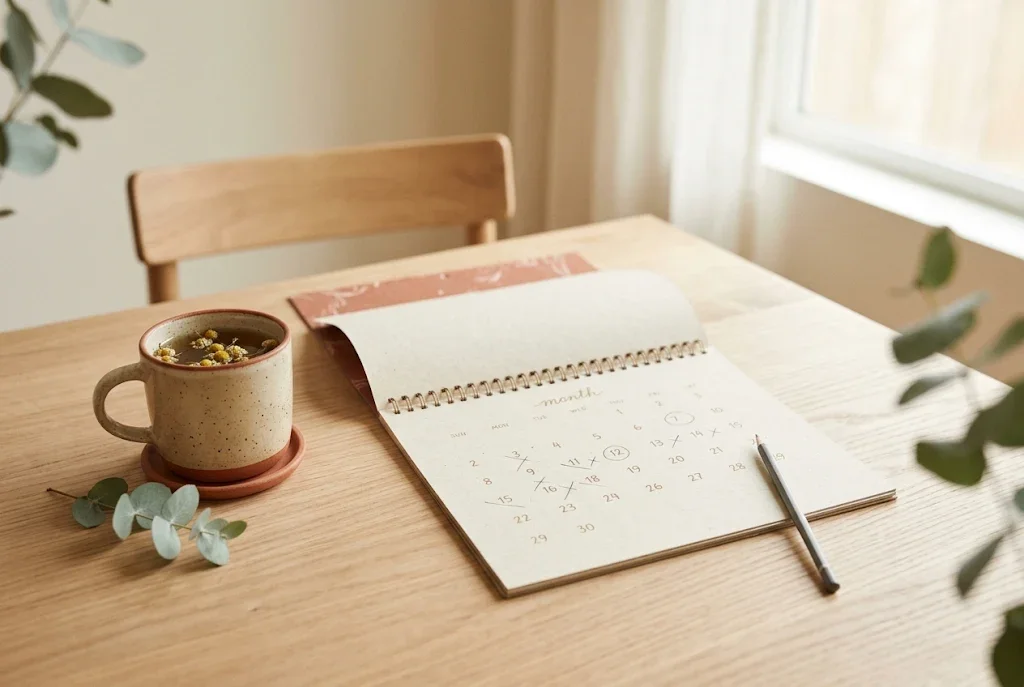
Some people track dates in an app, some write them in a notebook, some ask friends and read forums that say different things. For those living far from home, there is often the extra effort of reading about it in another language. The months go by and the same questions come up: are we getting the days right? Is ovulation really on day 14? What if my cycle is irregular?
Understanding how the cycle works brings clarity. Knowing which days give you the best chance of getting pregnant helps you plan each month more calmly.
The fertile window is the set of days in the menstrual cycle when intercourse can lead to a pregnancy. It is centred on ovulation, the moment the ovary releases an egg.
A 1995 study published in the New England Journal of Medicine followed 221 women trying to get pregnant and concluded that pregnancies began with intercourse within a 6-day window: the 5 days before ovulation and ovulation day itself. The chance was highest on the days closest to ovulation.
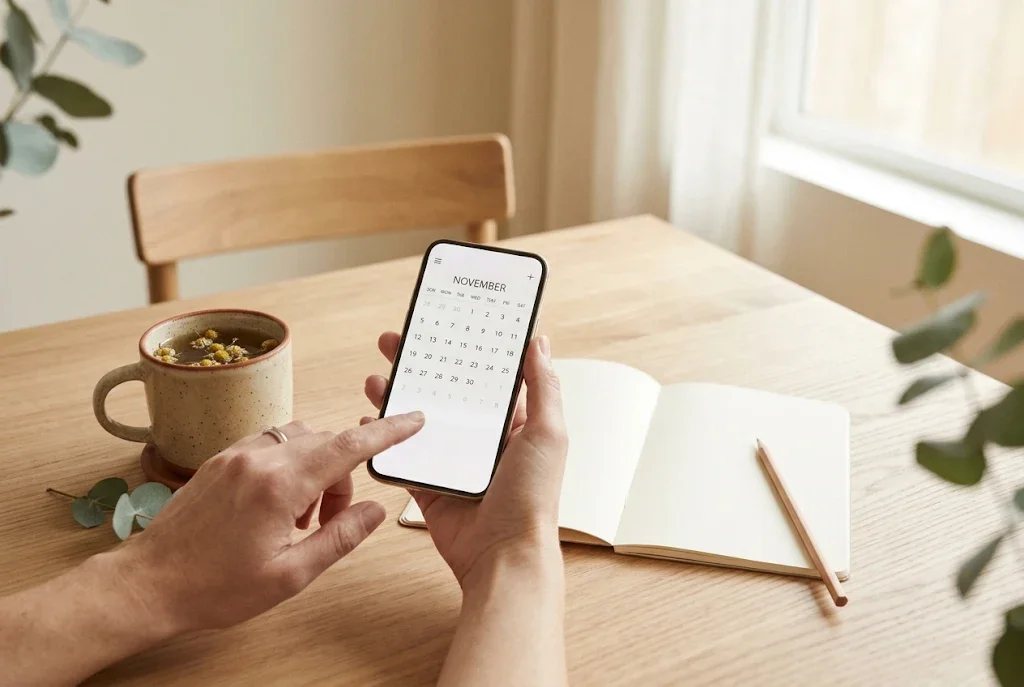
A cycle is counted from the first day of one period to the first day of the next. Regular cycles between 21 and 35 days are normal. In most women, ovulation happens between 10 and 16 days before the next period.
So ovulation only falls on day 14 in a 28-day cycle. In a 32-day cycle, likely ovulation is around day 18; in a 25-day cycle, around day 11. The fertile window starts about 5 days earlier.
A simple rule: in short cycles, the fertile window sits closer to the end of your period; in long cycles, further away from it.
About 6 days in each cycle. Sperm can survive for up to 7 days inside the body, so intercourse a few days before ovulation can still lead to a pregnancy. After ovulation, the egg lives for about 24 hours.
Example: in a 30-day cycle, likely ovulation is on day 16 and the fertile window runs from day 11 to day 16.
To skip the sums, use the fertile window calculator, which shows the dates for your next three cycles, irregular cycles included.

Besides the sums, the body gives a few signs around ovulation:
Combining the signs with the calendar gives you a fuller picture of your cycle.
In theory, there is only a short window around ovulation. In practice, ovulation can shift from one month to the next, and sperm can survive for several days. That is why a pregnancy straight after a period is unlikely, but possible, especially in short cycles.
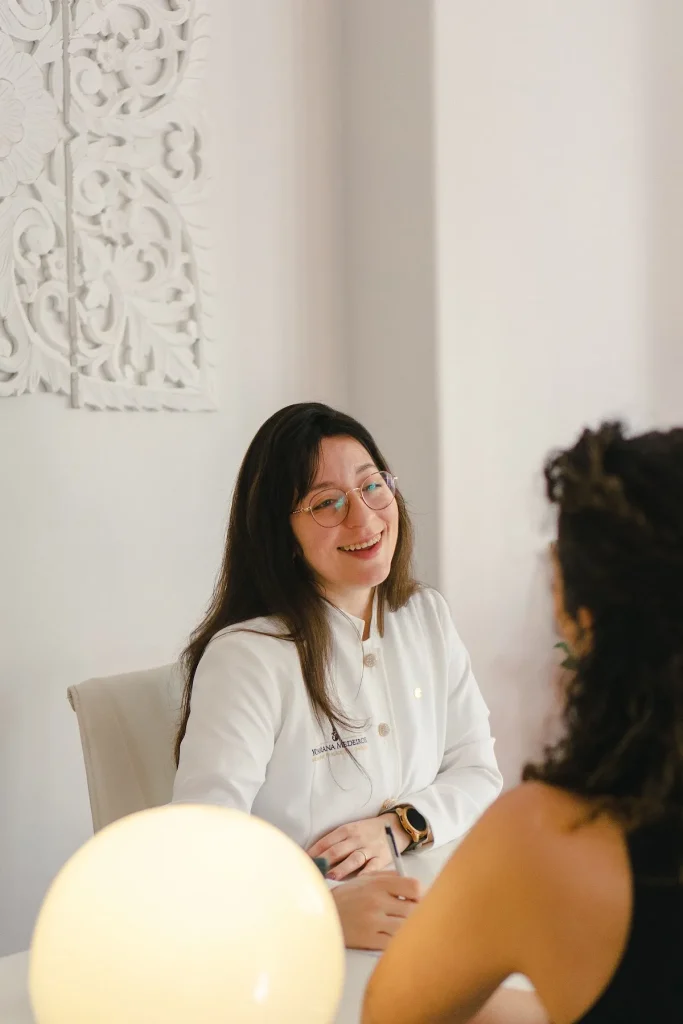
In Traditional Chinese Medicine, the menstrual cycle is looked at together with the rest of the body: sleep, digestion, stress, cold and heat, energy across the month. A regular, comfortable cycle is seen as a sign of balance, and acupuncture may help support that balance while you try to conceive. In the fertility acupuncture consultation, Yorrana listens to the story of your cycle, observes your tongue and pulse and agrees a plan with you, in English.
For your first visit
An unhurried conversation, tongue and pulse assessment, your first acupuncture session and a plan agreed with you.
Book the first consultationLearn more about the acupuncture consultation
For those trying to conceive
First consultation and 4 follow-up sessions (5 sessions), to use within 4 months.
Book the Fertility ProgrammeLearn more about the Fertility ProgrammePrices include VAT. See all prices · Also on ClassPass.
Between two periods: it ends on ovulation day, which is, on average, 14 days before the next period.
It depends on the length of your cycle. In a 28-day cycle, it starts around day 9; in short cycles, it starts earlier.
About 6 days: the 5 days before ovulation and ovulation day.
Record your cycles for a few months and enter the shortest and longest in the calculator. It will show you a wider window.
The first consultation costs €60 (60 min) and the Fertility Programme €234 (5 sessions over 4 months), VAT included.
An hour to look at your cycle properly and leave with a plan made for you. Choose the day and time on Fresha; if you have questions, message us on WhatsApp.