


First acupuncture consultation
For your first visit
An unhurried conversation, tongue and pulse assessment, your first acupuncture session and a plan agreed with you.
Book the first consultationLearn more about the acupuncture consultation
By Yorrana Medeiros, acupuncturist · · 6 min read
Three in the morning. The house is silent, the body is tired and the mind is wide awake, going over the day that has passed and the one to come. Some people wake at almost the same time every night and wonder why. Traditional Chinese Medicine has its own way of looking at sleep, which helps make sense of these patterns. This article explains that view, what happens at the visit and a simple routine to get ready for the night.

There are many ways to sleep badly. At the visit, three come up most often:
After poor nights, the days get heavier: less patience, more cravings for coffee and sweets, concentration fading by mid-afternoon. For anyone who has recently moved to Lisbon, a new rhythm, new noises and the change of routine can add to restless nights.
In Traditional Chinese Medicine, day and night are Yang and Yin. During the day, Yang is active and turned outwards; at night, it draws inwards and the body settles into the calm rhythm of Yin. Sleeping well is, in this view, letting Yang withdraw.
The Heart houses the Shen, the mind. When the Shen is settled, sleep comes easily; when it is unsettled, by stress, worry or built-up tiredness, sleep becomes light and broken. That is why, in Chinese medicine, sleep is never looked at on its own: digestion, emotions, the menstrual cycle and your energy through the day are all part of the same picture.
Chinese medicine describes a 24-hour clock in which each organ has its period of greatest activity, two hours at a time. During the night:
This clock is a clue, not a diagnosis. It helps Yorrana ask the right questions and understand each person’s pattern, together with everything she hears and observes at the visit.
At the visit, some patterns come up often:
It can help to bring a short sleep diary covering one or two weeks: bedtime and waking time, waking during the night and how you felt in the morning.

Small habits help Yang withdraw at the end of the day:

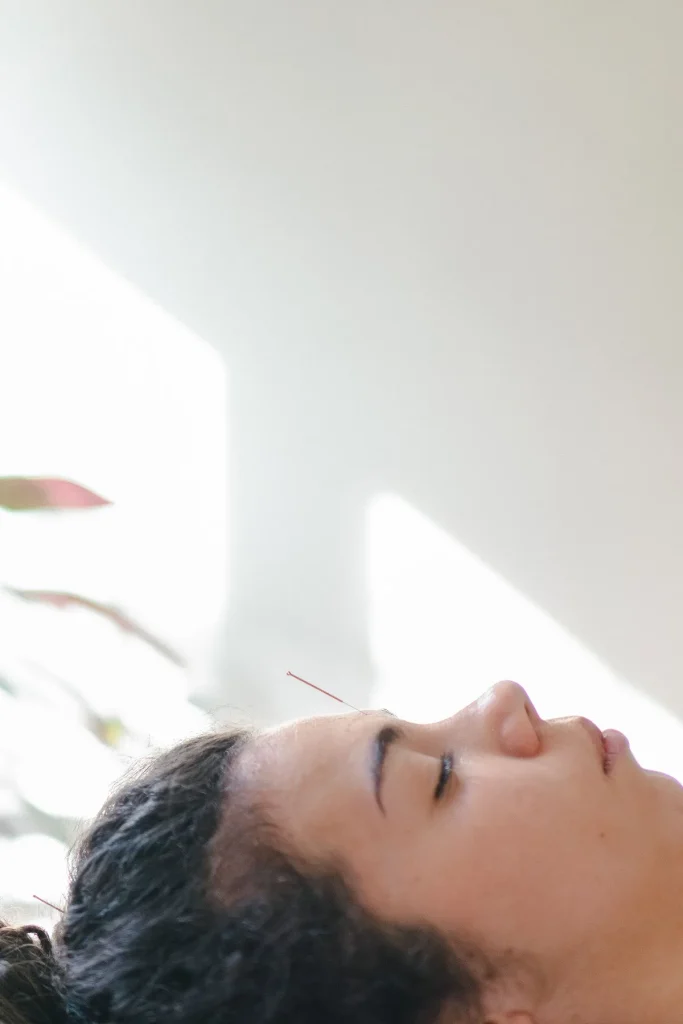
From the first visit, you leave with a reading of your nights through Chinese medicine: which pattern Yorrana observed, how acupuncture may help in your case, how many sessions she expects and which simple changes you can start that same night. Many people describe a sense of calm at the end of the session and a wish to rest.
Acupuncture may help reduce the stress and anxiety that keep you awake, calm the body and mind at the end of the day and improve the quality of your sleep, so you sleep more hours in a row and wake with more energy. In Chinese medicine, it is a way of helping the body find its natural rhythm again, letting Yang withdraw at night.
The plan is reviewed over the sessions as your nights change.
For your first visit
An unhurried conversation, tongue and pulse assessment, your first acupuncture session and a plan agreed with you.
Book the first consultationLearn more about the acupuncture consultation
After your first consultation
The acupuncture session, a review of your plan and advice for everyday life.
Book a follow-upLearn more about follow-up sessions
Acupuncture support over several months
First consultation, 6 follow-up sessions and 1 cupping session (8 sessions), to use within 4 months.
Book the TCM ProgrammeLearn more about the TCM ProgrammePrices include VAT. See all prices · Also on ClassPass.
In Chinese medicine, each two-hour period is linked to an organ. Waking at the same time every night is a clue that Yorrana puts together with everything else she hears and observes at the visit.
Between 1am and 3am is the Liver’s time, often linked to tension and heavy dinners; between 3am and 5am is the Lung’s time, often linked to sadness and worry. It is one clue among many.
Ideally before 11pm, to fall asleep during the Gallbladder period.
Many people relax so much during the session that they fall asleep on the couch. Afterwards, it is common to feel calm and ready to rest.
Yes. Tell Yorrana at the visit which medication you take. Any change to your medication is always decided with whoever prescribed it.
The first visit costs €60 (60 min), a follow-up session €50 (50 min) and the TCM Programme €315 (8 sessions over 4 months), VAT included.
An hour to look at your nights properly and leave with a plan to sleep more calmly. Choose the day and time on Fresha; if you have questions, message us on WhatsApp. [Book your first visit] · [Message on WhatsApp]